Cloud Transformation: The Definitive Guide for Modern Enterprises

In the digital-first era, Cloud Transformation has moved from being a technical choice to a core business strategy. It's not just about moving files to a remote server; it's about fundamentally changing how your organization delivers value. At Codexal, we've helped dozens of companies transition from brittle on-premise systems to resilient, cloud-native architectures.
1. More Than Just Migration: Re-Engineering for the Cloud
Many businesses make the mistake of treatinig cloud transformation as a simple "lift and shift" project. While moving existing VMs to the cloud is a start, it doesn't unlock the true potential of the technology. Real transformation involves adopting a cloud-native mindset, which includes microservices, containerization (Docker/Kubernetes), and serverless computing.
By leveraging these technologies, businesses can achieve what we call "Hyper-Scalability"—the ability to handle millions of simultaneous users without manual intervention, as seen in our DevOps implementation guide.
- Retire: Identify and turn off redundant systems.
- Retain: Keep critical legacy systems on-prem if needed.
- Rehost: Move as-is (Lift & Shift).
- Replatform: Minor optimizations for cloud compatibility.
- Refactor: Re-architecting for cloud-native features.
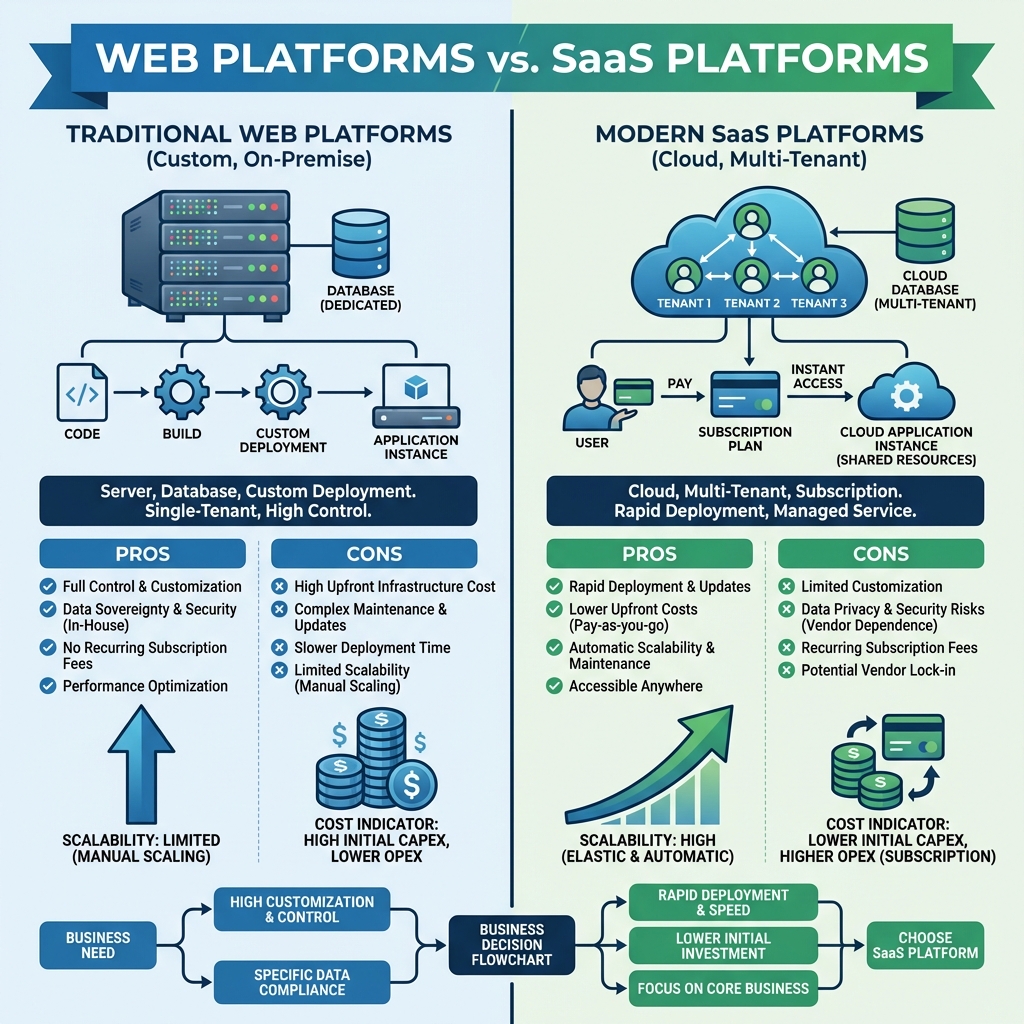
- Repurchase: Moving to a SaaS alternative.
2. Security and Compliance in the Cloud
One of the biggest hurdles to adoption is the fear of data loss. However, modern cloud providers like AWS and Azure offer security features that are often superior to private data centers. The key is the "Shared Responsibility Model"—the provider secures the cloud, and you secure the data *in* the cloud.
Implementing Cybersecurity Best Practices is essential for cloud success. This includes identity and access management (IAM), encryption at rest and in transit, and continuous monitoring.
3. FinOps: Controlling Your Cloud Spend
A common pitfall is the unmanaged sprawl of cloud resources, leading to "sticker shock" when the monthly bill arrives. This is where FinOps comes in. It's a cultural shift that brings financial accountability to the variable spend model of the cloud. By using auto-scaling and spot instances, businesses can reduce their cloud bill by up to 30%.
4. The Hybrid and Multi-Cloud Approach
Not everything belongs in the public cloud. A Hybrid Cloud strategy allows you to keep highly sensitive data on-premise while using the public cloud for web applications and data processing. Meanwhile, a Multi-Cloud strategy prevents vendor lock-in by spreading workloads across multiple providers like Azure and Google Cloud.
Conclusion: The Journey Ahead
Cloud transformation is a journey of continuous improvement. It enables your business to innovate faster, scale globally, and reduce legacy debt. At Codexal, we are ready to guide you through every step of this journey, from initial audit to ongoing optimization.
Ready to modernize your infrastructure? Explore our Infrastructure Services or contact us for a detailed assessment.